
More Than Just Fun and Games
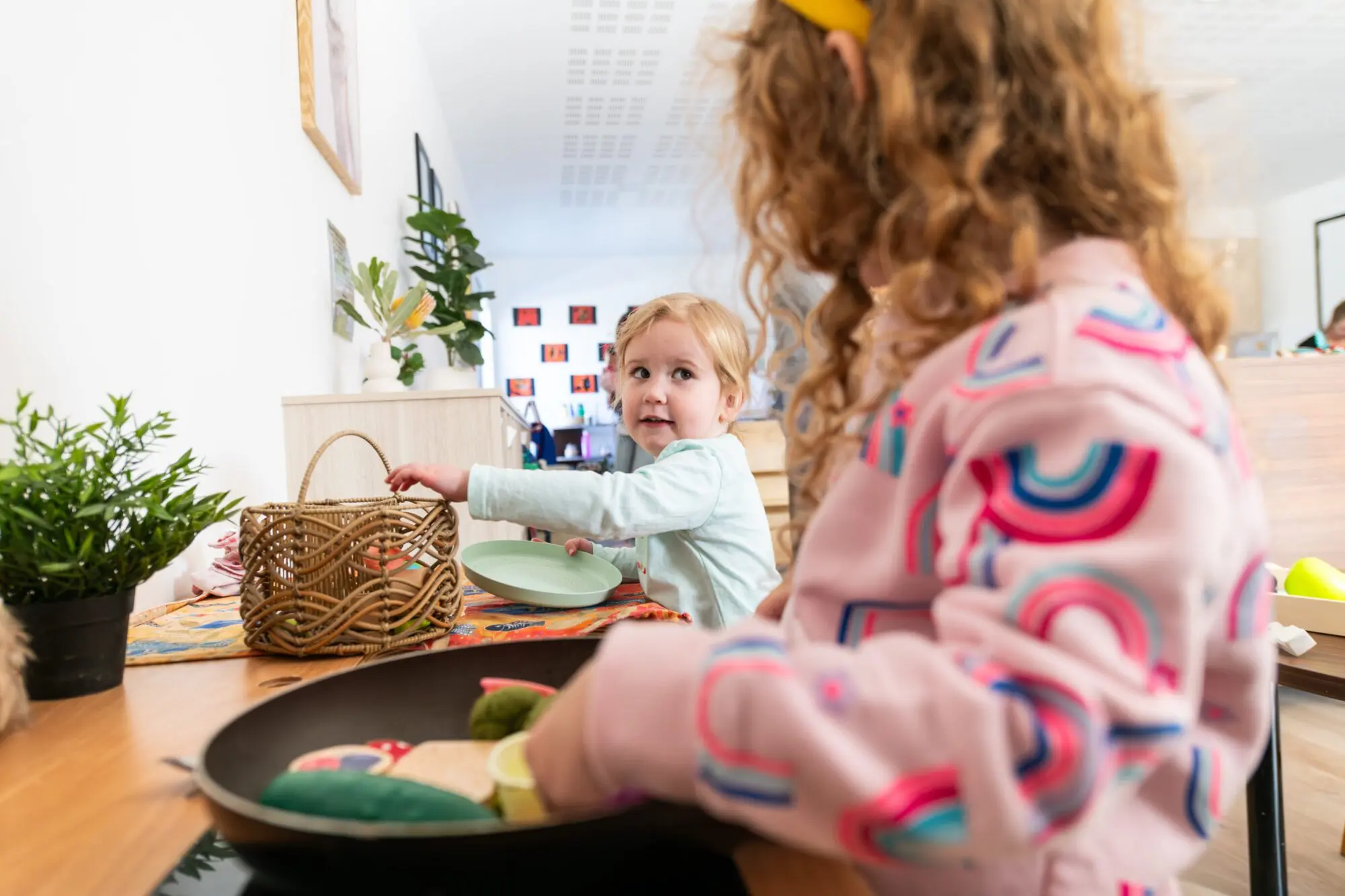
If you’ve ever watched your child spend 20 minutes stacking cups, knocking them down, and stacking them again, congratulations. You’ve witnessed play-based learning in action. Play-based learning is an approach to early childhood education where children learn through hands-on, open-ended exploration at their own pace. It means trusting that when a toddler is pouring water between containers, they’re not just making a mess. They’re learning about volume, cause and effect, and how the world works. At Wonderschool, play-based learning is the foundation of everything we do. We believe children learn best when they’re actively engaged, not passively entertained.
How It Works at Wonderschool
In practice, this looks different depending on your child’s age. For babies, we allow uninterrupted time for play, with a range of textures and spaces to explore at their own leisure. Our rooms include spaces for rest, relaxation, sensory play, dramatic play and wonder, and the resources we offer are often simple, everyday items that can be used in a multitude of ways. For our toddlers, we offer challenges with consistency. It’s important for two and three-year-olds to know where they can find resources in their space and revisit their favourite activities each time they attend. We structure our rooms to create small, intimate play areas so children can have a sense of independence while our Educators thoughtfully observe and support them.
The Power of Loose Parts Play
At the heart of our approach is something called loose parts play, a concept developed by Simon Nicholson. The idea is simple: items like wooden blocks, fabric scraps, cardboard tubes, stones, shells, and bottle caps can be used for constructing, designing, redesigning, and reimagining in endless ways. Unlike traditional toys that often have a single purpose and limited engagement, loose parts ask children to be the inventors of their play. They make decisions, test ideas, and use their imagination in ways that are entirely their own. This kind of open-ended play encourages creative thinking, problem-solving, and collaboration naturally.
Why It Matters
The benefits are backed by research and recognised by Australia’s Early Years Learning Framework. Play-based learning builds critical thinking and problem-solving skills, develops social and emotional intelligence, supports language development, and encourages creativity. It also develops fine and gross motor skills, fosters independence and confidence, and supports overall wellbeing. When your child comes home covered in paint and full of stories about the “castle” they built, trust that serious learning happened that day.
Come and See It in Action
At Wonderschool, every room, every resource, and every interaction is designed to support children as active, capable learners. We believe children are naturally curious, that simple resources spark deeper learning than pre-packaged toys, and that every child deserves time to play, wonder, and discover. If you’d like to see play-based learning in action, we’d love to show you around. Get in touch with our team to book a tour today.