
Spring in Canberra arrives all at once. One week the yard is frosted and quiet, the next there is blossom on the ground, worms in the garden bed and children who do not want to come inside. It is the best time of year to watch what outdoor play actually does for young children, because there is so much more to notice.
Outdoor time is often described as a break from learning, a chance to run around before the real work starts. In early childhood education it is closer to the opposite. Some of the most complex thinking a child does all day happens in the yard.
Loose parts: the value of things that are not toys
Give a four-year-old a plastic fire engine and they will play fire engine. Give them a length of plastic pipe, a milk crate, some smooth river stones and a bucket of water, and you will not be able to predict what happens next. Neither will they.
This is loose parts play: materials with no fixed purpose that children can move, combine, redesign and carry from one place to another. Sticks, fabric, pipes, tyres, pinecones, pebbles.
What looks like mess is usually a sustained piece of problem solving. Children test whether the water will run downhill. They negotiate who holds which end. They rebuild it when it collapses, and they rebuild it differently each time. That combination of persistence, negotiation and revision is the foundation of the thinking children will need in a classroom later. It is also why a yard full of open-ended materials often produces deeper concentration than a yard full of equipment that only does one thing.
Risky play is not the same as unsafe play
This is the part that makes adults uneasy, and it is worth being clear about.
Educators distinguish between a risk and a hazard. A risk is something a child can see, assess and choose to take: climbing a little higher, balancing along a log, jumping from a height they have measured with their own eyes. A hazard is something a child cannot see or judge, such as a broken latch, a loose fitting or an unstable branch.
Our job is to remove the hazards and keep the risk available.
Children who are allowed to take managed risks learn where their body ends. They develop balance, spatial judgement and an accurate sense of their own capability. A child who is never permitted to test a limit does not become safer. They become less practised at judging, which tends to show up later and at a greater height.
At Wonderschool, our Educators supervise closely, check equipment daily and step in the moment something crosses from risk into hazard. What we do outdoors is ensure children are sun safe. What we try hard not to do is say be careful every time a child looks up.
Growing something and then eating it
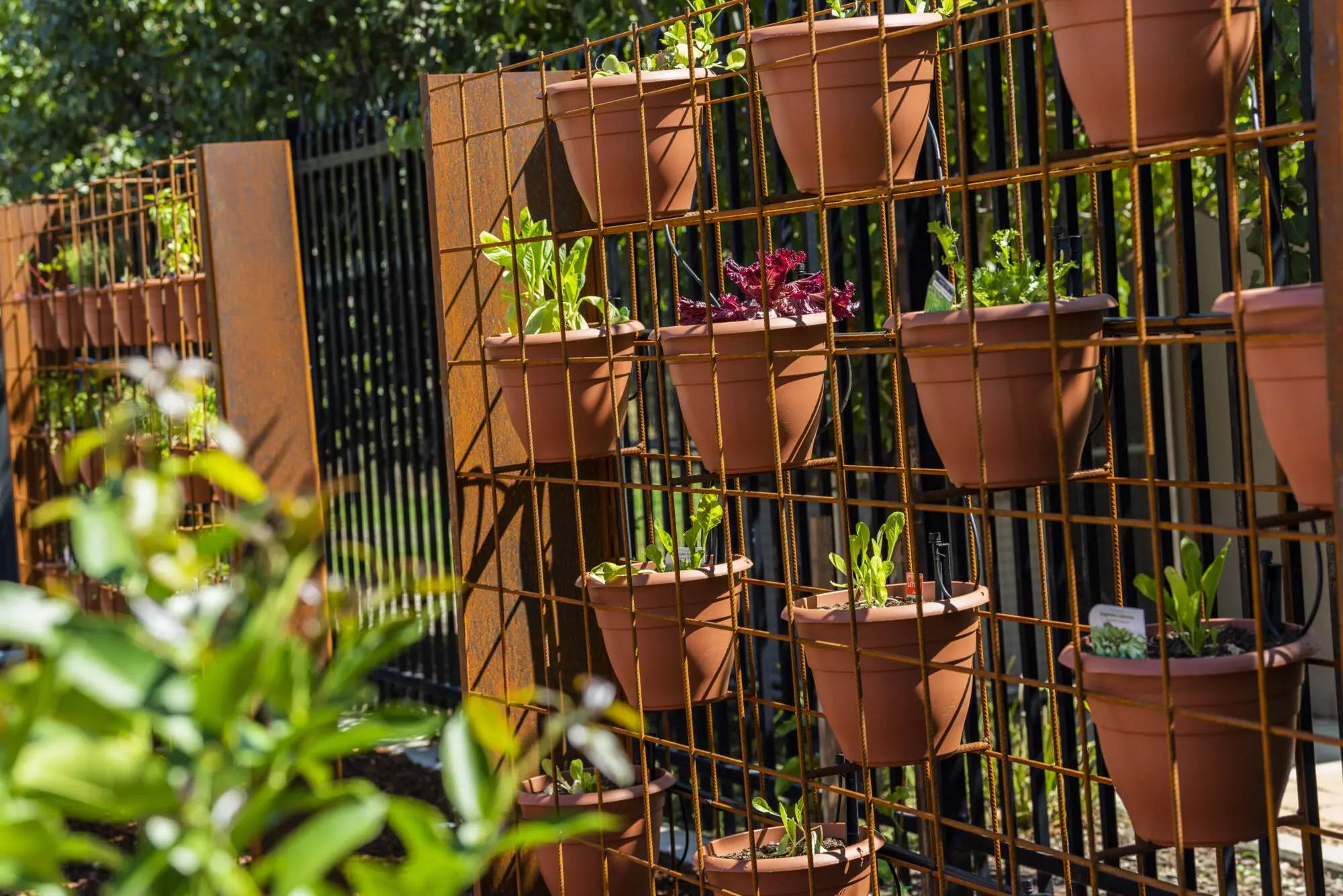
Spring is planting season, and the vegetable garden earns its place in a way that very little else does.
Children who plant a seed, water it for weeks, watch it struggle or thrive and eventually eat what grew are learning patience, cause and effect, and where food actually comes from. They are also far more likely to try a vegetable they grew themselves. Any adult who has negotiated over broccoli will see the value in that.
At Wonderschool our garden beds really come to life in spring with flowers and fresh grown produce for the children to play, grow and learn from in our Centres including Conder, Taylor and Woden.
Noticing that things change
Young children do not automatically notice seasonal change. They learn to.
An Educator who says ‘the wattle was not out last week, was it?’ is teaching observation, comparison and vocabulary in a single sentence. Over the course of the spring season, children start bringing the noticing themselves. There are more birds than before. The puddle from Monday has gone. This seedling is taller than the one beside it. The blossoms are on the tree when before it was just sticks.
That habit of looking carefully and then describing what you saw is science, well before anyone gives it that name.
Bringing it home
None of this requires a purpose-built yard. Three things that work almost anywhere:
- Keep a box of loose parts. Corks, lids, offcuts, stones, nothing with instructions.
- Take the same walk each week and ask what is different from last time.
- Plant something in a pot together, and let them do the watering, badly.
Come and see a spring morning with us
All Wonderschool locations have outdoor play areas, and our Taylor and Woden locations have the most expansive outdoor play areas. Wonderschool’s early learning centres each have their own outdoor character, and October is when they are at their best. If you’re interested to book a tour with us, book a time in the morning while the children are outside at play, that’s when you’ll really see spring play come to life.