
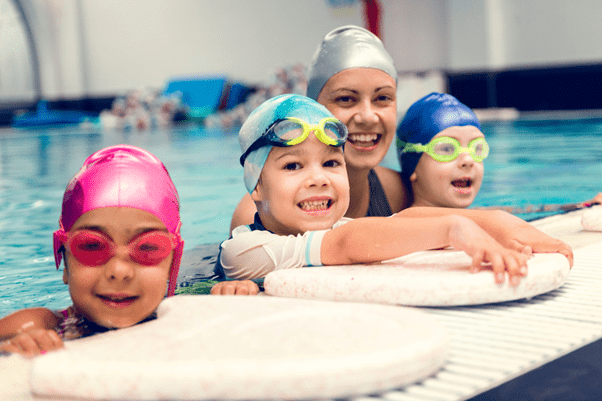
Water confidence isn’t just about safety. It supports emotional regulation, physical confidence, and readiness for structured learning environments like preschool and school.
If you’re a parent getting ready for that first year of preschool or school, you’ve probably thought a lot about whether your child knows their letters, can count to ten, or sit still long enough for circle time. Those things matter. But readiness for learning is about so much more than academic knowledge.
Children who feel safe and capable in their bodies are more ready to learn. They can regulate their emotions, follow instructions, cope with new environments, and trust the adults guiding them. These are the foundations every teacher hopes to see on day one.
And one of the most effective ways to build those foundations? Water confidence.
Not just swimming ability. Not just water safety. But a deep, calm sense of capability that children develop when they learn to move, breathe, and trust in the water. It’s a quiet superpower – and the research backs it up.
What Is Water Confidence?
Water confidence goes beyond being happy to splash around. It means a child feels safe, supported, and capable in the water. They trust the adults teaching them, they understand the routines, and they know how to respond when something feels challenging.
A water-confident child:
- Initiates activities without constant prompting
- Controls their breathing before going under
- Recovers to standing independently
- Tries new things, even when it feels a bit scary at first
This kind of confidence doesn’t happen by accident. It builds through calm, consistent, step-by-step teaching where children are gently challenged within safe boundaries. The process itself – not just the outcome – is what develops the child.
Emotional Regulation and Calm Under Pressure
One of the most powerful (and often overlooked) benefits of swimming is what it teaches children about managing big feelings.
Water immersion creates measurable physiological calming. Hydrostatic pressure – where water presses evenly on all submerged body parts – releases dopamine and helps reduce adrenaline levels. It functions similarly to the deep pressure input of a weighted blanket. After pool sessions, parents and therapists consistently report increased calm, better focus, and more regulated behaviour for hours afterwards.
Then there’s breath control. Learning to take a deliberate breath before going under, to blow bubbles, and to recover calmly mirrors the deep breathing techniques therapists use to help children manage anxiety. Children practise this every single lesson, often before they even have the words to describe what they’re feeling. That practice transfers directly to classroom situations: waiting, listening, sitting through something uncomfortable, and adapting when things change.
Following Instructions and Structured Routines
Quality swim programmes are, in many ways, a child’s first classroom.
Children wait for their turn. They listen to an instructor who isn’t Mum or Dad. They follow multi-step directions. They arrive, prepare, move through a predictable routine, and transition between activities on cue. Sound familiar? It should. These are the exact behaviours teachers look for in school readiness.
Safety demands in the pool mean children learn quickly that listening matters. Instructions aren’t optional. And because lessons are engaging, children learn to focus willingly rather than being forced to comply.
Research on physically active learning in preschoolers found that movement-based instruction produced a 58% reduction in off-task behaviour. Children who learn through their bodies pay better attention than those expected to sit and absorb.
Confidence, Independence, and Trust
Every time a child puts their face in the water despite being nervous, floats on their back for the first time, or swims to the wall independently, they collect evidence that they can face challenges and succeed.
This ‘I can do hard things’ mindset doesn’t stay at the pool. Children who overcome challenges in water tend to approach schoolwork with more determination, join new activities with less hesitation, and feel proud of their growing independence.
They also build trust in adults outside the family – an essential transition for children starting preschool or school, where they need to feel safe with new teachers and carers.
Why Water Safety Matters More Than Ever
Beyond the developmental benefits, water confidence is also a life-saving skill.
Drowning remains the leading cause of injury death for Australian children aged 1 to 4. According to the 2024 Drowning Report, many of these incidents are preventable with early water familiarisation and consistent swim education.
Children can begin lessons with a swim school such as Aquatots as early as 6 weeks of age with parent-accompanied water familiarisation. Year-round, consistent participation produces the best outcomes – seasonal bursts followed by long breaks lead to skill regression.
Water Confidence Is Learning Confidence
The evidence is clear. Early water confidence supports far more than safety around pools and beaches, though that benefit alone is reason enough.
What the research tells us is that children who develop water confidence also build the calm, focus, physical capability, and trust that underpin successful learning. They arrive at preschool and school with practised skills in following directions, managing emotions, persisting through challenges, and working within structured environments.
Every child deserves to feel capable in their body. And when they do, they’re ready for anything a classroom can throw at them.
Find out more about Aquatot’s programs: aquatots.com.au/swim-programs.